Best Microphones for Remote Work 2026
Introduction
Welcome to our comprehensive guide on the best microphones for remote work in 2026. If you have spent any significant amount of time in virtual meetings, you know exactly how draining bad audio can be. You are attempting to negotiate a contract, present a quarterly review, or simply collaborate with your team, but your voice sounds like it is bouncing around a cavern. Dog barking, mechanical keyboards clicking, and neighborhood lawnmowers constantly bleed into the call. The difference between landing a promotion or losing a client's attention often comes down to communication clarity. People simply stop listening when they have to strain to hear you over digital noise and room reverberation.
Many remote workers mistakenly believe that an expensive webcam is the most vital upgrade for their home office. In reality, human psychology proves otherwise. We forgive low resolution video, blurry backgrounds, and poor lighting. But terrible, piercing, or muffled audio causes immediate listener fatigue and subconscious frustration. That is why replacing your laptop or basic webcam microphone with a dedicated hardware microphone is the single most impactful remote work upgrade you can make. The audio you push out to the world is your digital handshake. If it sounds weak, distant, or thin, you are projecting an unprofessional image.
In this expansive guide, we are looking at the heavyweights of the audio world tailored specifically for voice communication, Zoom calls, and remote presentations. We will discuss why dynamic microphones are essential for untreated home offices. We examine top tier recommendations such as the Shure SM7B, its modern amplified sibling the Shure SM7dB, and the accessible standard Rode PodMic. We also extensively cover what you should know about audio interfaces, room acoustics, gain staging, and the eternal USB versus XLR debate. Let us fix your remote communication stack once and for all, ensuring your voice is heard perfectly every single time you hit unmute.
TL;DR Verdict
Stop relying on laptop audio. For the absolute best remote work audio clarity, the Shure SM7dB stands as the undisputed champion due to its integrated preamp, providing massive, clean volume without complicated external hardware. If you already own high quality audio interfaces and lifters, the legacy Shure SM7B remains exceptional. For workers looking for robust broadcast sound on a budget, the Rode PodMic delivers fantastic value. Dynamic microphones rule the home office by completely rejecting the background noise that ruins professional calls.
Shure SM7dB: The Ultimate Remote Work Audio Solution
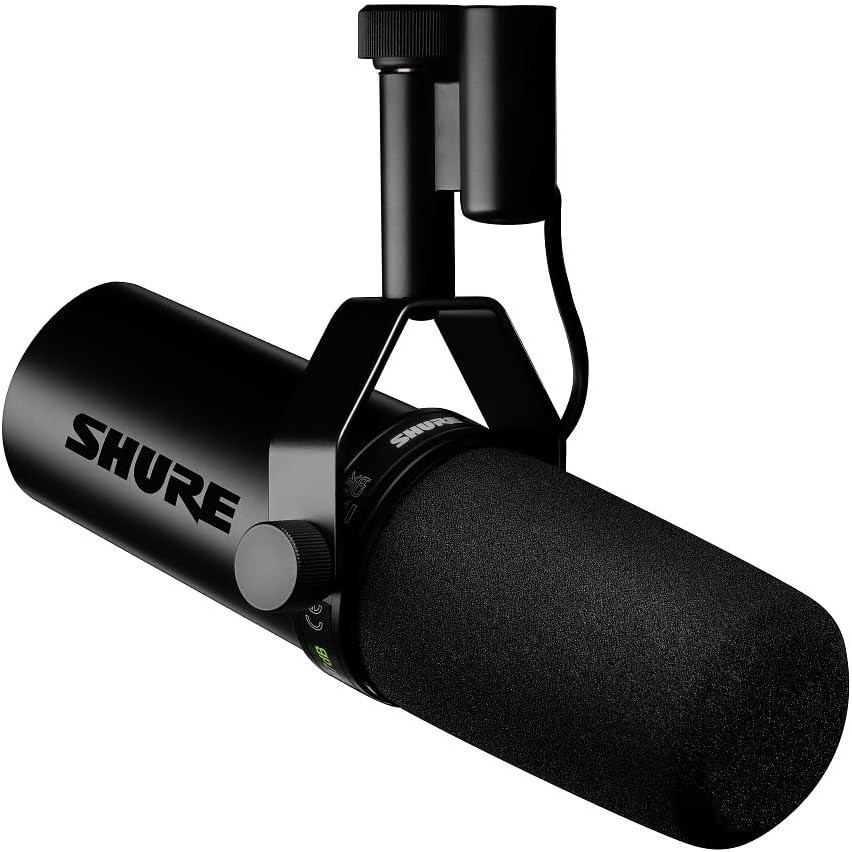
The Shure SM7dB is our top overall recommendation for any remote professional who demands nothing less than perfection. When you step into a Zoom or Microsoft Teams meeting with the SM7dB positioned in front of you, people notice. Not only does the microphone itself look iconic on camera conveying instant authority and professionalism but the audio profile it captures is rich, deep, and impossibly clear. This is the modernized iteration of perhaps the most famous broadcasting microphone in audio history, re-engineered specifically for modern creators and professionals who do not want to wrestle with complex studio equipment.
Key Features and Real World Usage
The defining feature of the Shure SM7dB is wrapped into its extremely subtle name change: the dB stands for decibels, signifying the built in active preamp. For decades, the primary hurdle to using its predecessor in a home office was gain. Traditional broadcast dynamics are famously quiet. To get a usable volume level, users had to purchase additional inline amplifier boxes and pair them with expensive audio interfaces. Shure completely solved this barrier with the SM7dB. Flip a switch on the back of the microphone, and you instantly engage a high quality, custom designed preamp that provides either +18dB or +28dB of perfectly clean, hiss free gain. You plug this microphone directly into any standard XLR audio interface, and you have booming, radio-ready vocal presence.
When working from home, noise rejection is the actual battleground. Home offices are full of distractions ranging from washing machines to delivery drivers knocking on the front door. The Shure SM7dB utilizes a cardioid polar pattern combined with internal air suspension shock isolation. It ignores everything happening behind it and below it. Your mechanical keyboard clicks are suppressed. Your dog barking down the hall is rejected. All the caller hears is the frequency response directly in front of the capsule: your voice. Furthermore, it incorporates advanced electromagnetic shielding that actively defeats the hum generated by your computer monitors, power bricks, and routers.
We have covered how this hardware operates extensively. You can read our detailed Shure SM7dB Review for more in depth specifications on its frequency response switches and shielding technology. Overall, whether you are hosting webinars, negotiating contracts with major clients, or leading daily stand up meetings, the SM7dB guarantees your voice cuts through perfectly.
Shure SM7B: The Studio Legend You Already Know
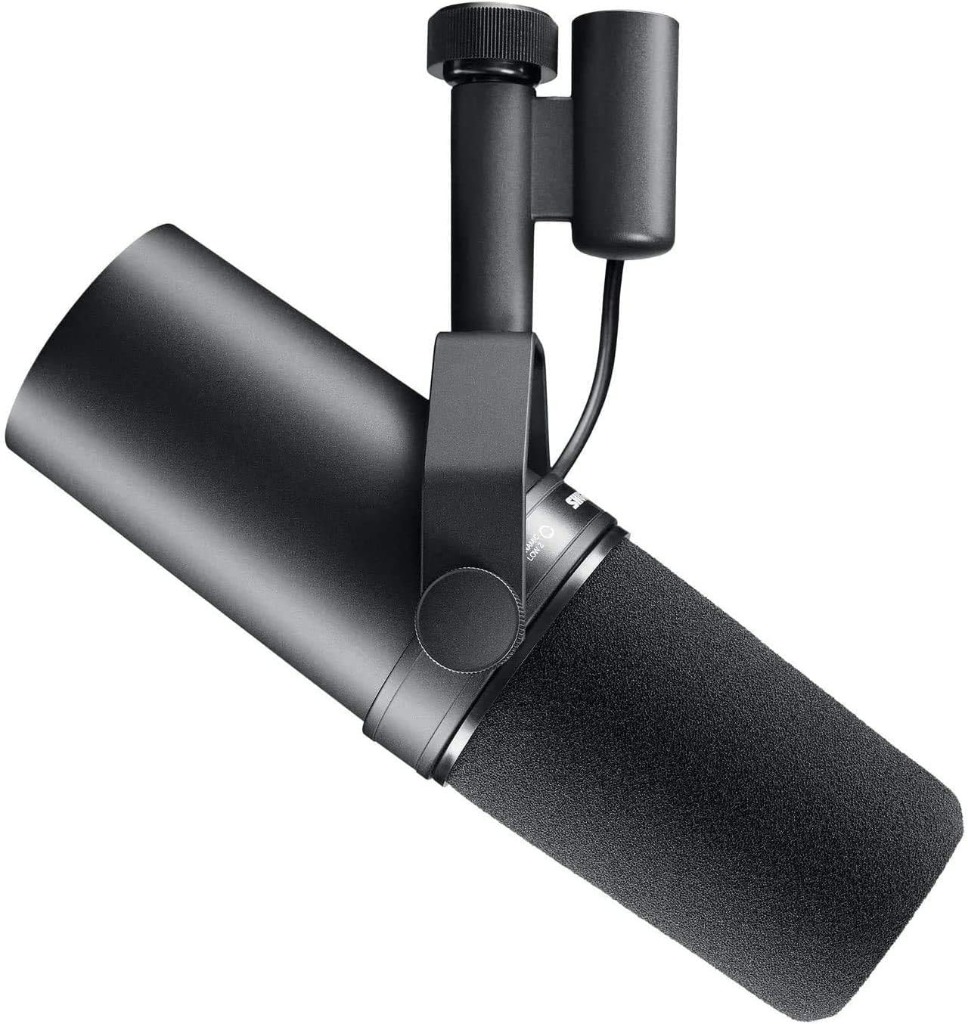
Before the SM7dB arrived to simplify the modern audio chain, the Shure SM7B reigned supreme across broadcasting, podcasting, and serious remote work setups. It is exactly the same capsule, the same acoustic profile, and the same legendary sound signature. While the SM7dB includes internal amplification, the SM7B is the purist option. It is the microphone chosen by elite audio engineers who prefer to handle amplification through their own dedicated hardware racks and boutique preamps.
Why It Remains Relevant for Home Offices
If you are piecing together a home office and you already own a substantial audio interface like a Universal Audio Apollo or a Focusrite Scarlett connected to a Cloudlifter, the SM7B is the more logical purchase. You do not need to pay a premium for a built in preamp if you already own high quality external gear. The Shure SM7B provides the exact same rich proximity effect. When you lean close to the large foam windscreen, the bass frequencies in your voice are naturally enhanced, giving you that iconic radio announcer resonance that commands attention during conference calls.
The build quality of the SM7B is practically indestructible. The heavy metal chassis acts as a tank against daily bumps, and the specialized yoke mount allows you to precisely position the microphone regardless of your boom arm orientation. It is incredibly important to note, however, that attempting to plug an SM7B directly into a cheap entry level interface will result in disappointment. You will be forced to crank the gain knob to maximum, introducing a terrible white noise hiss to your signal. We discuss this critical distinction at length in our Shure SM7B vs SM7dB comparison . If you have the supporting hardware, the Shure SM7B is flawless. If you do not, you should strongly consider the newer model. For a complete deep dive, read our dedicated Shure SM7B Review .
Rode PodMic: Accessible Broadcast Excellence
Not every remote worker wants to spend hundreds of dollars on a microphone and hundreds more on an audio interface. Sometimes, you just want excellent audio that destroys your built in laptop mic, looks fantastic on camera, and comes in at a highly accessible price point. The Rode PodMic is the absolute best entry point into professional dynamic audio. It takes the visual aesthetic and acoustic goals of top tier broadcast microphones and condenses them into a heavy, durable, and highly capable package.
Heavy Duty Build and Focused Sound
The first thing you notice when handling the Rode PodMic is its weight. Unlike many budget microphones encased in cheap plastic, the PodMic is solid metal, swinging on a robust metal swing mount. This weight actually serves an acoustic purpose it dampens vibrations traveling up the microphone boom arm before they can reach the internal capsule. The internal pop filter does an admirable job taming harsh plosives, meaning words starting with Ps and Bs do not result in explosive air bursts overloading the call.
Acoustically, the PodMic is tuned differently than the Shure models. While the SM7B series focuses heavily on deep, warm bass fullness and smooth presence, the PodMic is actively formulated for extreme clarity and midrange punch. It cuts through noise beautifully. It ensures every syllable you utter is highly intelligible, which is precisely what matters most during complex professional discussions or remote client pitches.
Comparison Table
| Microphone | Connection | Best For | Price |
|---|---|---|---|
| Shure SM7dB | XLR | Executives | Premium |
| Shure SM7B | XLR | Studio setups | High |
| Rode PodMic | XLR | Budget audio | Accessible |
For remote work the Shure SM7dB offers incredible broadcast clarity without the need for complex external preamps.
Buying Guide: Perfecting Remote Work Audio
Purchasing the microphone is only the first step in completely overhauling your remote work audio profile. A microphone acts as a single component within an entire signal chain. Understanding how these pieces interact guarantees you never experience audio dropouts or poor fidelity during crucial meetings.
Dynamic vs. Condenser Microphones Explained Again
We touched on this earlier, but it is the most critical mistake remote workers make. You will see many popular USB microphones marketed to streamers that utilize condenser capsules. Condenser microphones are structurally designed to be incredibly sensitive; they are built for acoustically treated vocal booths where isolation is guaranteed. If you place a condenser microphone in a home office with hardwood floors, bare drywall, and a window facing a street, it will record all of that chaotic noise. It will capture the central air conditioning turning on. It will capture the hum of your refrigerator. Dynamic microphones, like the Shure and Rode models we recommend here, require significant sound pressure positioned very close to the capsule to register volume. They physically ignore background noise. When you speak directly into a dynamic microphone, the room around you vanishes to the listener. This isolation is mandatory for professional calls.
The Role of an Audio Interface
If you purchase an XLR microphone, you cannot simply plug it into your computer USB port. XLR is an analog connection. You require an audio interface to bridge the gap. An audio interface acts as an external sound card. It accepts the XLR cable, provides an analog to digital conversion, and sends the clean digital signal to your computer via USB. Interfaces like the Focusrite Scarlett Solo or Elgato Wave XLR are highly recommended companions for these microphones. They provide incredibly steady, reliable performance across Windows and macOS without crashing your video conferencing software.
Microphone Placement and Boom Arms
The positioning of a dynamic microphone governs its sound quality entirely. Due to the strict noise rejection characteristics of dynamic capsules, you must address the microphone directly, typically keeping your mouth two to six inches away from the grill. If you place the microphone on a short desk stand near your keyboard, you will be too far away, and your voice will sound thin and distant. You must use a boom arm. A quality suspension boom arm, such as the Rode PSA1 or Elgato Wave Mic Arm, allows you to pull the microphone directly in front of your face while speaking during a meeting, and push it completely out of the frame when the call concludes. Furthermore, boom arms eliminate desktop rumble. If the microphone sits directly on your desk, every time you type or set down a coffee mug, low frequency thuds will transmit straight into the microphone capsule. Suspension boom arms absorb these vibrations before they ruin your audio track.
For more overarching advice on assembling gear, be sure to brush up on standard practices in our central hub: best podcast microphones which overlaps heavily with remote work hardware fundamentals.
FAQ Section
Why do I need a dedicated microphone for remote work?
A dedicated microphone dramatically improves how you sound to peers, clients, and managers on calls. It cuts down on background office noise and eliminates that tiny, hollow sound produced by laptop mics.
Are dynamic mics better for remote work than condenser mics?
Yes. Dynamic microphones like the Shure SM7B or Rode PodMic reject background noise and room echo much better than condensers, which are extremely sensitive to typing patterns and outside noise.
What exactly does the Shure SM7dB do differently?
The SM7dB includes a built in preamp, meaning it does not need a Cloudlifter or a very powerful audio interface to provide usable volume, unlike the standard SM7B.
Final Verdict
Stop settling for the invisible penalty of terrible audio. If you are serious about remote work, investing in a high-end dynamic microphone entirely changes your digital presence. The Shure SM7dB stands unrivaled for delivering elite studio sound directly to your home office with absolute zero hassle. Pair it with a simple audio interface and a solid boom arm, and you will never again have to repeat yourself during a crucial business meeting.