Affiliate disclosure: This page contains affiliate links. If you purchase via these links we may earn a commission at no extra cost to you. This helps support our research and operating costs.
Trying to decide between both models? See our full Shure SM7B vs SM7dB comparison here .
Audio & PodcastingShure SM7dB Review (2026): Built-In Preamp, Broadcast-Grade Sound
Who is this for?
- ️ Podcasters & voiceover artists
- Streamers & YouTube creators
- Remote workers on video calls
- Home studio vocalists
- Anyone ditching their Cloudlifter
Who should skip?
- USB-only beginners (needs XLR)
- Very tight budgets (SM58 fits better)
- Instrument miking (this is a vocal mic)
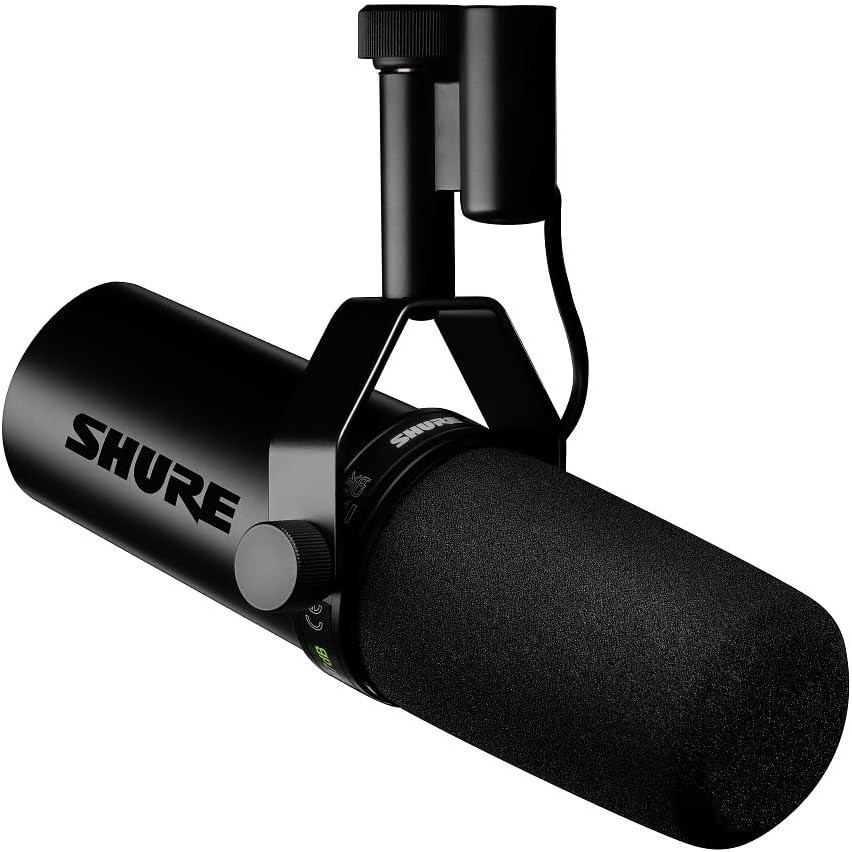
The Shure SM7dB delivers an immediate, full-bodied vocal presence out of the box, cleanly matching the exacting broadcast standard established by its predecessor. It captures audio with warmth and strict control, providing a robust, professional profile without the harshness or thinness common in entry-level condenser microphones.
See our full review of the original SM7B here .
More than a minor hardware refresh, the SM7dB addresses the primary structural limitation of the original SM7B: the physical requirement for massive external gain. By integrating an active preamp directly into the chassis, it eliminates the necessity for inline boosters like the Cloudlifter, removing a potential failure point and reducing the complexity of the signal chain.
Product Overview: What Makes the SM7dB Different?
At its core, the SM7dB is a traditional cardioid dynamic microphone, meaning its heavy moving-coil capsule naturally exhibits low sensitivity. It overcomes this physical limitation via an integrated active preamp built directly into the body. Users can toggle between three gain positions bypass, +18dB, and +28dB to optimally match interface output impedance. By supplying clean gain exactly at the capsule source rather than relying solely on an audio interface (which often introduces a noisy, high noise floor when maxed out), the SM7dB ensures pristine signal integrity.
The capsule and frequency curve are identical to the beloved SM7B (7Hz 27kHz, cardioid polar pattern), which is a deliberate choice. Existing SM7B fans get the same character they love; new users get to start at the top. The detachable A7WS windscreen handles plosives and breath noise without the sterile sound some foam filters introduce.
Specs Comparison: Shure SM7dB vs SM7B
| Specification | Shure SM7dB | Shure SM7B (Previous Standard) |
|---|---|---|
| Built-in Preamp | Yes Active, up to +28dB | No (requires external Cloudlifter) |
| Frequency Response | 7Hz – 27kHz | 50Hz – 20kHz |
| Polar Pattern | Cardioid | Cardioid |
| Gain Boost Positions | +0 / +18 / +28dB | N/A (flat, no switch) |
| Selectable EQ Filters | High-pass & Presence boost | High-pass & Mid-range boost |
| Connection Type | XLR (balanced) | XLR (balanced) |
| Weight | 950g (2.1 lbs) | 765g (1.69 lbs) |
| Best Use Case | Podcasting, streaming, vocal recording | Broadcast, radio, vocal recording |
Simplified What Does This Actually Mean?
The Built-in Preamp:
Think of your audio interface as a tap and
the SM7dB as a
water pressure booster already built into the pipe. You get full pressure full
volume without
any extra equipment.
+28dB of Gain:
Even if you have a quiet voice or a weak
interface, this
microphone pushes a strong, clean signal that software and editors don't need to
fight against. No
digital hiss, no cranking, just clean audio from the start.
SM7dB vs SM7B Gain Workflow Differences
Understanding the structural difference between these two microphones is strictly a matter of gain staging and workflow preference, as their sonic profiles are identical.
The SM7dB employs an active, integrated preamp designed by Shure. When supplied with 48V phantom power from an interface, it generates up to +28dB of perfectly clean, transparent gain internally. This creates a remarkably streamlined, plug-and-play workflow that allows the microphone to connect directly to almost any entry-level audio interface without introducing preamp hardware noise or hiss.
Conversely, the SM7B is strictly passive and notoriously gain-hungry. It typically requires 55 60dB of clean gain to reach baseline broadcast levels. Unless paired with a high-end interface or dedicated professional preamp, the SM7B necessitates an external inline booster to achieve adequate volume without raising the noise floor. While the SM7dB offers immediate structural simplicity, the SM7B remains the choice for engineers who prefer to meticulously craft their own modular signal chains.
Pros and Cons
The Good
- Zero need for an external Cloudlifter or FetHead
- Identical legendary capsule to the SM7B
- Extended frequency response (7Hz vs 50Hz on SM7B)
- Three selectable gain positions versatile for any source
- Excellent plosive rejection with included windscreen
- Built like a tank Shure's legendary road-tested construction
The Bad
- XLR only USB users must buy an interface too
- Heavier than the SM7B (needs a sturdy boom arm)
- Pricier than the SM7B (the preamp justifies it, but it's still a premium cost)
Stop fighting your interface's gain knob.
The SM7dB brings professional preamp headroom right to your desk.
Check Current Price on AmazonReal-World Use Cases
- The Podcaster: This is arguably the best dynamic microphone for podcasting money can buy right now. The cardioid pattern rejects your keyboard, your HVAC, and your co-host across the room. What it captures is just your voice warm, full, and immediately broadcast-ready. If you have listened to any major podcast in the last decade, you have almost certainly heard an SM7-series microphone.
- The Streamer: Streamers will love how the SM7dB handles the chaos of a live streaming setup. A mechanical keyboard three inches away? The SM7dB rejects it. A fan running overhead? Gone. Gaming headset audio bleed? Minimal. You get clean vocals over anything your viewers are watching, without spending time on noise gates.
- The Voiceover Artist: The presence boost EQ filter on the SM7dB gives voice recordings a subtle forward clarity that cuts through music beds and sound effects in video production. For commercial voiceover, explainer videos, or YouTube narration, this translates directly to a more polished, professional edge.
- The Remote Professional: If your job involves video calls, client presentations, or recorded Zoom interviews, your microphone quality is part of your personal brand. The SM7dB turns a basic laptop call into something that sounds like you genuinely invested in the conversation and people notice.
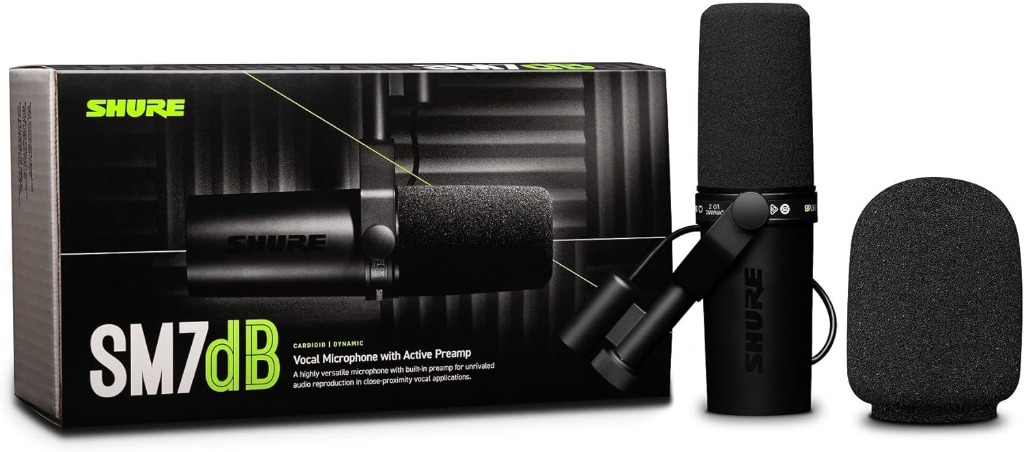
Is the Shure SM7dB Worth It? (vs SM7B and Blue Yeti)
Prefer the classic modular setup?
If you already own a high-end interface or prefer building your own detailed signal chain, the original Shure SM7B without the built-in preamp might be the better fit. Read our deep dive into the Shure SM7B →
Here is the honest answer: if you already own an SM7B and a Cloudlifter, you don't need to swap. The SM7dB is solving a problem you've already solved. If you prefer a traditional signal chain and don't mind managing external gain, read our full Shure SM7B review for a deeper look at the classic model. But if you're starting fresh, buying the SM7B and a Cloudlifter costs almost as much as the SM7dB and the SM7dB version is a cleaner, more elegant solution. It is the better buy in 2026.
Against the Blue Yeti and similar USB condensers, the comparison is almost unfair. The Yeti is a fine microphone for casual use. The SM7dB is a professional-grade broadcast microphone. Condenser microphones pick up significantly more room noise, which sounds great in a treated studio and terrible in a standard bedroom or home office. The SM7dB's dynamic capsule naturally rejects that ambient noise, which is why it sounds professional without proper acoustic treatment.
The bottom line: for anyone serious enough to use an XLR interface, the SM7dB is the single mic purchase that you will genuinely not need to upgrade from.
Technical Specs
| Spec | Details |
|---|---|
| Transducer Type | Dynamic (Moving Coil) |
| Polar Pattern | Cardioid |
| Frequency Response | 7Hz – 27kHz |
| Built-in Preamp Gain | +0 / +18 / +28dB selectable |
| Output Impedance | ≤150Ω (balanced XLR) |
| Equivalent Noise Level | <20dB SPL (A-weighted) |
| Maximum SPL | 180dB |
| Dimensions | 189mm (L) x 95mm (W) |
| Weight (with A7WS) | 950g |
| In the Box | SM7dB, A7WS windscreen, break-resistant swivel adapter |
The Final Verdict
The Shure SM7dB is the SM7B finally grown up. It keeps every bit of that iconic sound character while eliminating the one inconvenience that held the older mic back. The built-in preamp is not a gimmick it is genuinely well-implemented, adding clean gain without the noise that you'd typically introduce through an underpowered interface channel. If you want a microphone that sounds expensive from day one and that you will never need to replace, this is it.
4.7 / 5.0 Outstanding
Frequently Asked Questions
Does the Shure SM7dB need a separate preamp or audio interface?
No external preamp or Cloudlifter needed. The SM7dB has a built-in active preamp that adds up to +28dB of clean gain, meaning it works directly with most standard XLR audio interfaces without any extra hardware in the chain.
What is the difference between the Shure SM7dB and the SM7B?
The SM7dB is essentially an SM7B with an integrated active preamp. The SM7B requires an external booster for quieter sources, while the SM7dB eliminates that entirely, giving you a cleaner, simpler setup right out of the box. For a complete breakdown of the original model's workflow and gain requirements, see our detailed SM7B review .
Is the Shure SM7dB good for streaming and YouTube?
Absolutely. The cardioid pattern excels in untreated rooms by rejecting off-axis noise from fans, keyboards, and background chatter. It captures a warm, broadcast-quality vocal that sounds strikingly professional in streaming and YouTube video content.
Can the SM7dB handle loud sources like voice-overs and singing?
Yes. The SM7dB's wide frequency response (7Hz 27kHz) and selectable preamp gain (+0dB / +18dB / +28dB) make it easily adaptable from quiet podcast conversations all the way up to projecting vocalists and enthusiastic voiceover deliveries. Its max SPL of 180dB handles almost any vocal situation.
Where to Buy
The Shure SM7dB is available on Amazon. Check current pricing and availability using the button below.
View on Amazon →